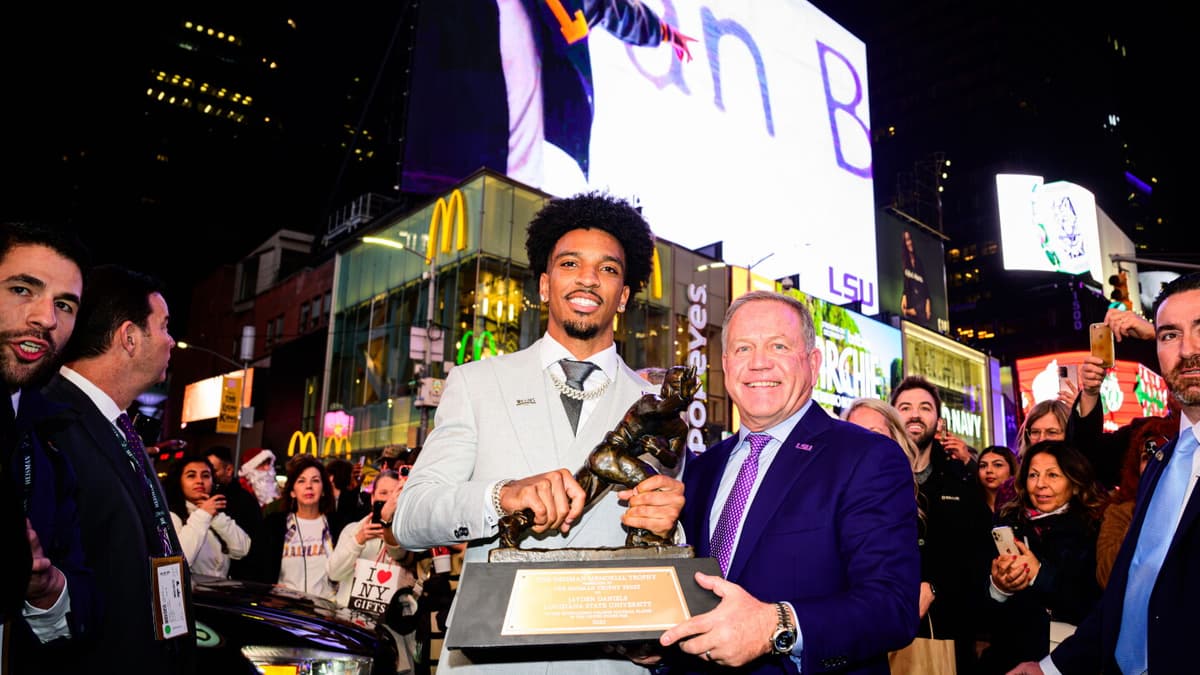
In a developing situation involving Commanders quarterback Jayden Daniels and Louisiana State University (LSU), Daniels has reportedly requested that the university return his Heisman Trophy. This request follows a dispute concerning the school's use of his name, image, and likeness (NIL) related to his time as a standout player at LSU.
The conflict appears to have escalated after Daniels expressed concerns over how the university has been leveraging his identity without his consent. This demand for the return of his Heisman Trophy, awarded to the most outstanding player in college football, underscores the growing tension between student-athletes and educational institutions regarding the commercialization of their likenesses.
Background on the Dispute
Daniels, who gained recognition for his exceptional performance on the field during his college career, is now navigating the complexities of professional football while addressing his relationship with LSU. The Heisman Trophy controversy highlights the ongoing discussions surrounding athlete rights and the evolving landscape of college sports, particularly with the advent of NIL deals.
As universities increasingly capitalize on the talents of their athletes, the need for clear guidelines and agreements regarding the use of student-athletes' identities has become more pressing. Daniels' situation may serve as a catalyst for further discussions on how institutions handle the commercial aspects of college athletics.
Implications for Student-Athlete Rights
This incident not only affects Daniels but also raises broader questions about the rights of student-athletes in the current sports environment. As more athletes advocate for control over their personal brands, the outcomes of such disputes could set important precedents for future interactions between athletes and their respective schools.
As the situation unfolds, it remains to be seen how LSU will respond to Daniels' request and what measures will be taken to address the concerns he has raised. The outcome may have lasting implications for the relationship between student-athletes and their universities, particularly in the realm of commercial rights and recognition.