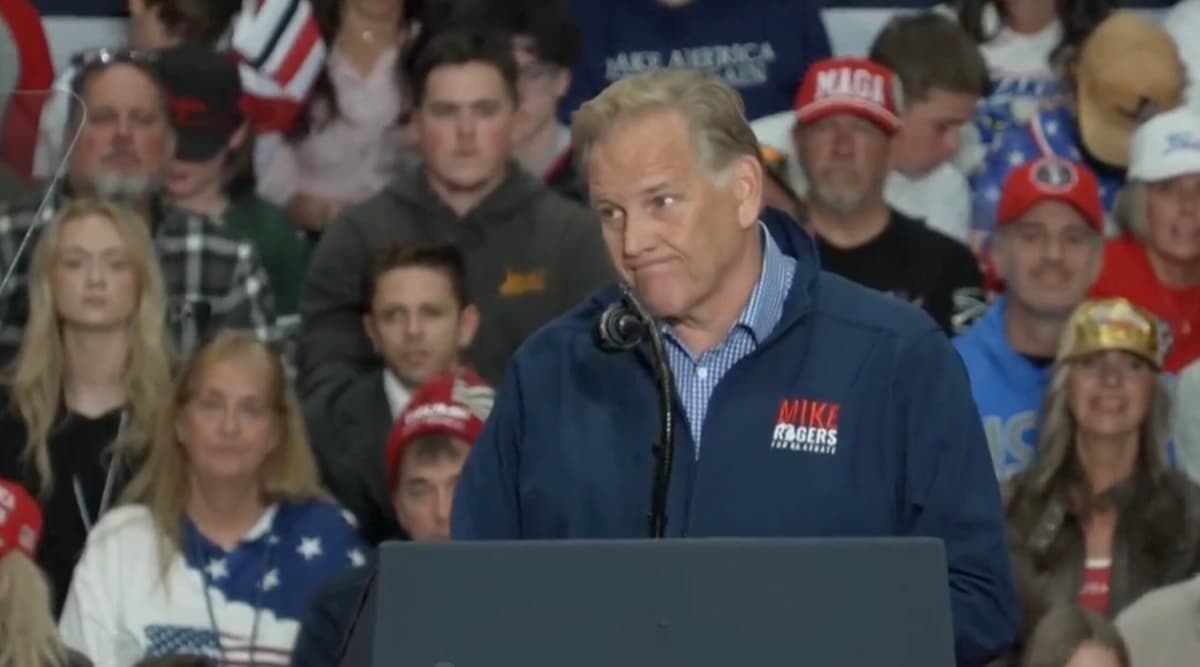
During a recent rally for former President Donald Trump, Congressman Mike Rogers (R-MI) found himself in an uncomfortable moment when his attempt at humor fell flat. As he aimed a joke at his political opponent, Dr. Abdul El-Sayed (D), the crowd responded with silence, leaving Rogers awkwardly waiting for applause that never came.
The incident occurred as Rogers took the stage to speak to a gathering of Trump supporters. With the atmosphere charged with enthusiasm for the former president, Rogers seemed confident as he delivered his punchline. However, instead of the expected laughter and cheers, he was met with an eerie quiet from the audience, highlighting the unpredictable nature of live political events.
Political Climate and Audience Reception
This moment underscores the challenges politicians face when attempting to engage with their constituents. While humor can often serve as a bridge in political discourse, it can also backfire, particularly in a highly charged environment like a Trump rally. The audience's reaction—or lack thereof—may reflect the divided opinions surrounding both Rogers and El-Sayed, as well as the broader political landscape.
Rogers' experience is a reminder of the importance of connecting with voters on a personal level. As political campaigns ramp up, candidates are tasked with not only delivering their messages but also resonating with their audiences in ways that foster enthusiasm and support. The silence that followed Rogers' joke may serve as a cautionary tale for politicians navigating the complexities of humor in political rhetoric.