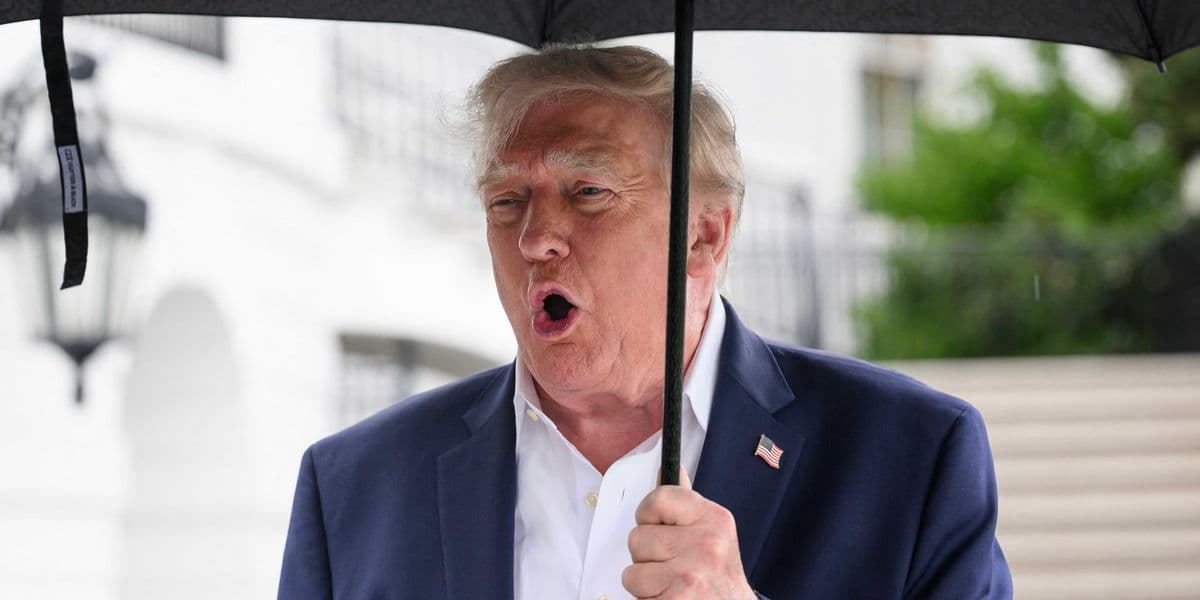
In a surprising statement made outside the White House on Sunday, President Donald Trump claimed that the United States has the "best poverty numbers." This assertion has sparked skepticism and debate among social media users and political commentators alike. The comments were made during a press interaction, where Trump emphasized the strength of the U.S. economy and the administration's efforts to reduce poverty.
Context of the Statement
The President's remarks come in the wake of recent data released by the U.S. Census Bureau, which provides insights into poverty levels and economic conditions across the country. While the administration has pointed to various economic indicators as signs of progress, critics argue that the overall poverty rate and the challenges faced by many Americans tell a different story.
Social media platforms, particularly X/Twitter, have been flooded with reactions to Trump's statement. Users have raised questions about the accuracy of the claim, highlighting disparities in income and living conditions that persist in many communities. The discussion has underscored the ongoing debate about economic inequality and the effectiveness of current policies aimed at addressing poverty.
Reactions and Implications
Political analysts are examining the implications of Trump's comments, considering how they fit into the broader narrative of his administration's economic policies. Some experts suggest that while certain metrics may show improvement, the lived experiences of millions of Americans reveal a more complex reality. The conversation around poverty in the U.S. remains a critical issue as the nation approaches the next election cycle.
As the discourse continues, many are calling for a more nuanced understanding of economic health and poverty in America, urging both policymakers and the public to look beyond surface-level statistics. The dialogue surrounding Trump's remarks highlights the importance of addressing the root causes of poverty and ensuring that economic growth benefits all segments of society.