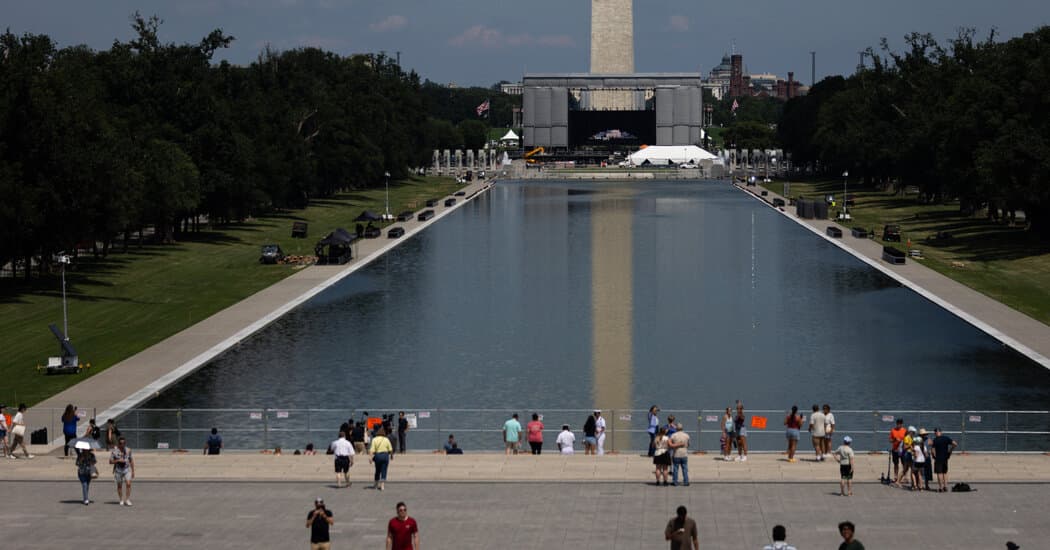
President Trump has significantly transformed Washington, D.C., creating a landscape dominated by fences and guard members, as he aims to showcase his ability to improve the city. This shift has led to perceptions of the capital as both a construction zone and an armed camp, reflecting the administration's approach to governance and security.
Security Measures and Construction
The changes in Washington, D.C., have been marked by an increased presence of security personnel and physical barriers throughout various neighborhoods., these measures are part of a broader strategy by the Trump administration to assert control and demonstrate a commitment to enhancing safety and order in the city. The fortified areas have raised concerns among residents and visitors alike, who are grappling with the implications of living in a city that resembles a heavily secured zone.
In addition to the heightened security, construction projects are visibly underway, with barriers and fencing altering the familiar urban landscape. This transformation has sparked discussions about the balance between security and accessibility in the nation's capital, as many question whether the changes are necessary or if they contribute to a climate of fear and division.
Perceptions of Governance
Critics of the administration's approach argue that the fortified environment is indicative of a broader trend in governance that prioritizes spectacle over substance. The visual impact of fences and guards may serve to reinforce Trump's narrative of being the sole figure capable of improving the city, but it also raises questions about the long-term effects on community trust and civic engagement. As the city adapts to these changes, the conversation surrounding security, governance, and public space continues to evolve.
As Washington, D.C. Adjusts to this new reality, the implications of Trump's remaking of the city will likely resonate beyond its borders, influencing perceptions of security and governance in urban areas across the country. The transformation of the capital serves as a potent reminder of the current political climate and the ongoing debates about the role of leadership in shaping the public sphere.