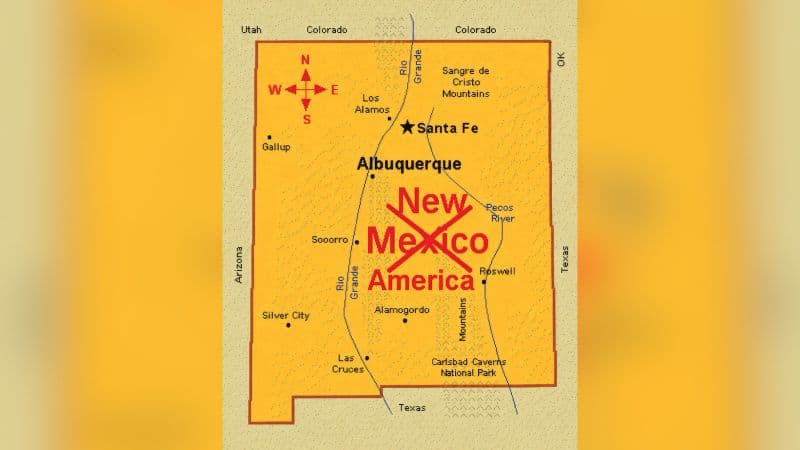
President Donald Trump sparked controversy on Sunday by sharing a map that renames New Mexico as “New America.” The post, which was made on his social media platform, comes just days after he signed an executive order aimed at changing the name of the state. The move has drawn attention and criticism from various quarters, raising questions about the implications of such a name change.
Reactions to the Name Change
The suggestion to rename New Mexico has been met with mixed reactions. Supporters of the president may view it as a patriotic move, while opponents argue that it undermines the state's rich history and cultural identity. New Mexico, which has a diverse population and a unique heritage, has been known by its current name since it became a U.S. territory in the 19th century.
Critics have expressed concern that the name change could be seen as an attempt to erase the historical significance of the state and its indigenous roots. Activists and historians have voiced their disapproval, emphasizing the importance of preserving the original name that reflects the state's cultural legacy.
Political Implications
This latest move by President Trump comes amidst a backdrop of ongoing political tensions. The executive order to change the name has raised questions about the administration's priorities and its approach to issues of identity and history. As the nation approaches the next election cycle, the implications of such a name change could resonate with voters who are sensitive to matters of cultural representation and historical accuracy.
As the discussion continues, it remains to be seen how this proposal will be received in New Mexico and beyond. The state’s residents, lawmakers, and cultural leaders are likely to engage in further dialogue regarding the implications of this name change and its potential impact on the state's identity.