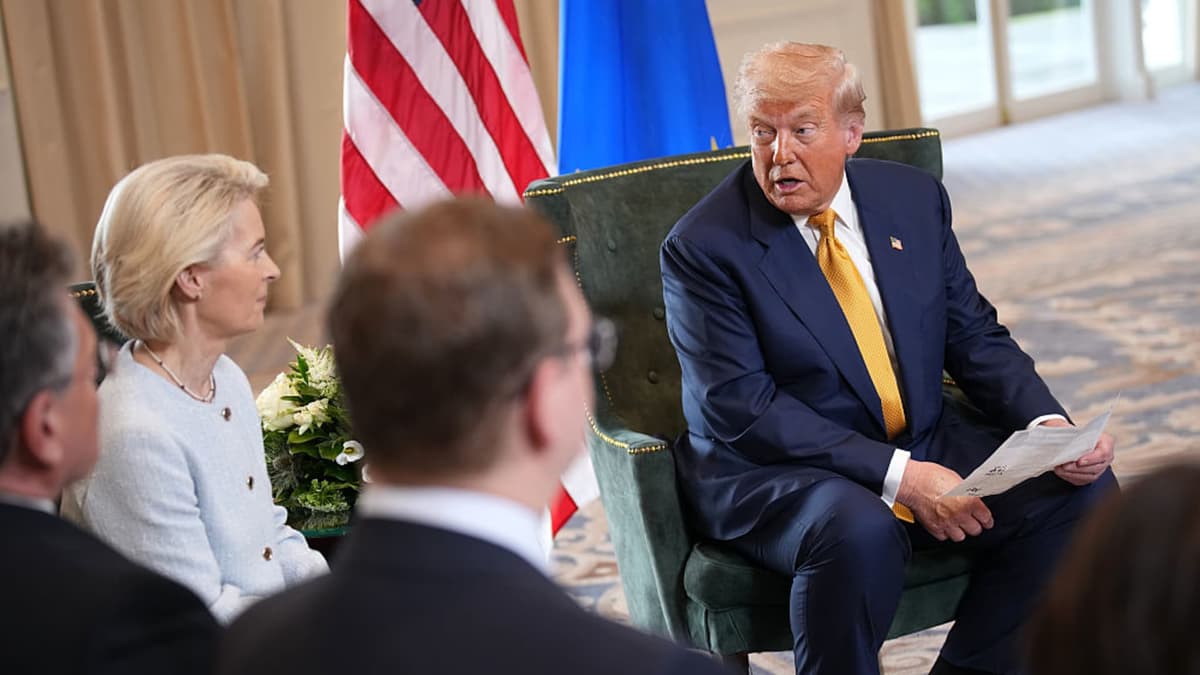
Former President Donald Trump has taken to social media to express his discontent with the European Union's recent decision to impose fines on major U.S. technology companies. In a post on Truth Social, Trump criticized the EU's actions against Google, as well as previous penalties levied against other tech giants such as Apple, Meta, and Amazon.
Trump's remarks come in light of the EU's ongoing efforts to regulate large technology firms, which have faced scrutiny over issues ranging from data privacy to anti-competitive practices. The fines imposed on these companies are part of a broader strategy by European regulators to hold American tech firms accountable for their market behavior.
Potential Tariffs on the Horizon
In his post, Trump suggested that the U.S. should consider imposing tariffs on European goods in retaliation for what he perceives as unfair treatment of American companies. He argued that the penalties are detrimental not only to the companies involved but also to American workers and consumers. Trump's comments reflect a growing sentiment among some U.S. lawmakers and business leaders who believe that the EU's regulatory framework is excessively punitive towards American firms.
The former president's statements have reignited discussions about the delicate balance between regulation and innovation in the technology sector. While proponents of regulation argue that it is necessary to protect consumers and ensure fair competition, critics warn that excessive fines could stifle innovation and harm the economy.
Broader Implications for U.S.-EU Relations
Trump's threats of potential tariffs may have broader implications for U.S.-European relations, which have been strained in recent years over various trade and regulatory issues. As both sides navigate complex economic landscapes, the response to these fines could set the tone for future interactions between American tech firms and European regulators.
As the situation develops, it remains to be seen how the Biden administration will respond to Trump's comments and whether any formal actions will be taken regarding tariffs or other measures against the EU. The ongoing discourse highlights the challenges faced by multinational corporations operating in an increasingly regulated global environment.