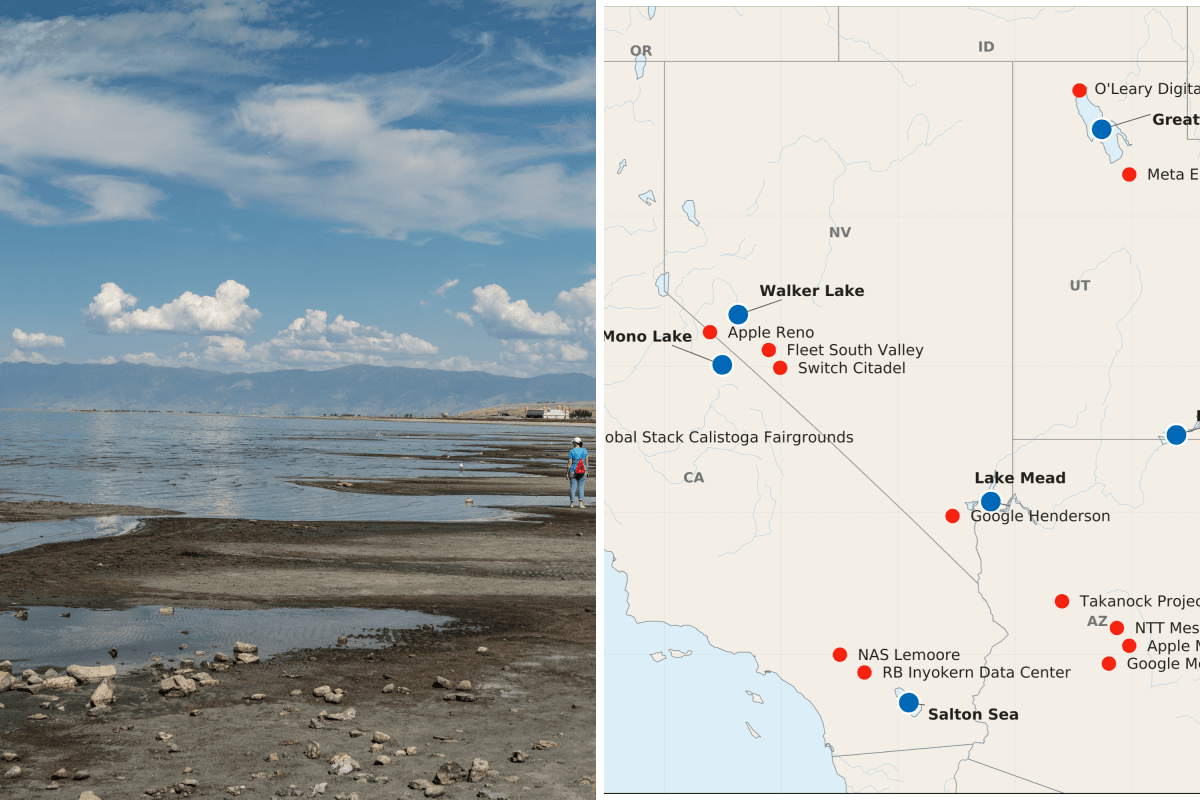
As the effects of climate change continue to manifest, America's Western lakes are experiencing significant shrinkage, raising alarms about water scarcity. This environmental crisis is coinciding with a boom in artificial intelligence data centers, which require substantial amounts of water for cooling and operational purposes. The intersection of these two trends is prompting new concerns among environmentalists and local communities.
Environmental Impact and Water Use
Data centers, which are critical to supporting the growing demand for AI technologies, are being developed in proximity to these diminishing water resources. The process of cooling servers in these facilities often necessitates large quantities of water, exacerbating the already strained water supplies in regions where lakes are receding. Experts warn that this could lead to a further depletion of local water sources, impacting not only ecosystems but also the communities that rely on them for drinking water and agriculture.
As the demand for data processing and storage continues to rise, the construction of new data centers is likely to increase. This trend raises critical questions about sustainable practices and the balance between technological advancement and environmental stewardship. Some local governments are beginning to reassess their water management strategies in light of these developments, aiming to mitigate the adverse effects of both climate change and industrial expansion.
Community Concerns
Residents in affected areas are expressing growing unease over the implications of these developments. Many are calling for stricter regulations on water usage by data centers and greater transparency regarding their environmental impact. Community advocates argue that without careful planning and consideration, the continued growth of these facilities could lead to irreversible damage to local ecosystems and a decline in quality of life for residents.
As discussions around water scarcity and technological growth evolve, stakeholders from various sectors are being urged to collaborate on sustainable solutions. The challenge lies in balancing the urgent need for technological infrastructure with the imperative to protect vital water resources. As the situation develops, it remains to be seen how policymakers will address these complex issues and what measures will be implemented to safeguard both the environment and the needs of local communities.