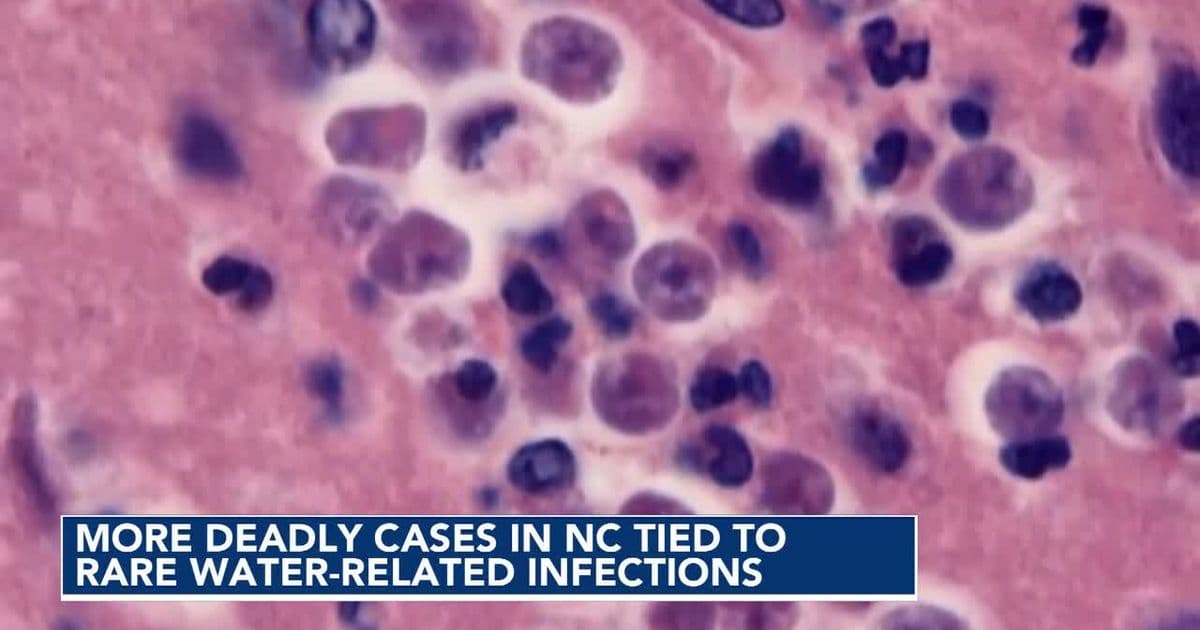
As North Carolinians prepare to enjoy the Labor Day weekend at lakes and coastal areas, health experts are issuing warnings about two rare but potentially deadly water-related infections: brain-eating amoeba and flesh-eating bacteria. With many families set to take advantage of the holiday by swimming and engaging in water activities, understanding the risks associated with these infections is crucial for safety.
Understanding the Risks
The brain-eating amoeba, known scientifically as Naegleria fowleri, is a rare but serious infection that occurs when water containing the amoeba enters the body through the nose. This typically happens during activities such as swimming in warm freshwater lakes or hot springs. Symptoms can appear within one to two weeks after exposure and may include headache, fever, nausea, and vomiting, progressing to more severe neurological symptoms. While infections are extremely rare, they are often fatal.
Flesh-eating bacteria, on the other hand, can be found in both saltwater and freshwater environments. These bacteria can enter the body through cuts or open wounds, leading to serious infections. Symptoms may include severe pain, swelling, and redness at the site of the infection, along with fever and chills. Early medical intervention is critical for treatment and to reduce the risk of severe complications.
Prevention Measures
Health officials recommend several precautions to minimize the risk of these infections during water activities. Swimmers should avoid submerging their heads in warm freshwater lakes and should refrain from swimming in waters that appear murky or have a high level of pollution. It is also advised to keep wounds covered and to avoid swimming if you have open cuts or sores. Additionally, individuals should be cautious when swimming in brackish waters and should seek immediate medical attention if they experience any concerning symptoms after exposure.
As families plan their holiday activities, staying informed about these potential hazards can help ensure a safe and enjoyable Labor Day weekend. By taking simple precautions and being aware of the symptoms associated with these infections, swimmers can better protect themselves and their loved ones while enjoying North Carolina's beautiful waterways.