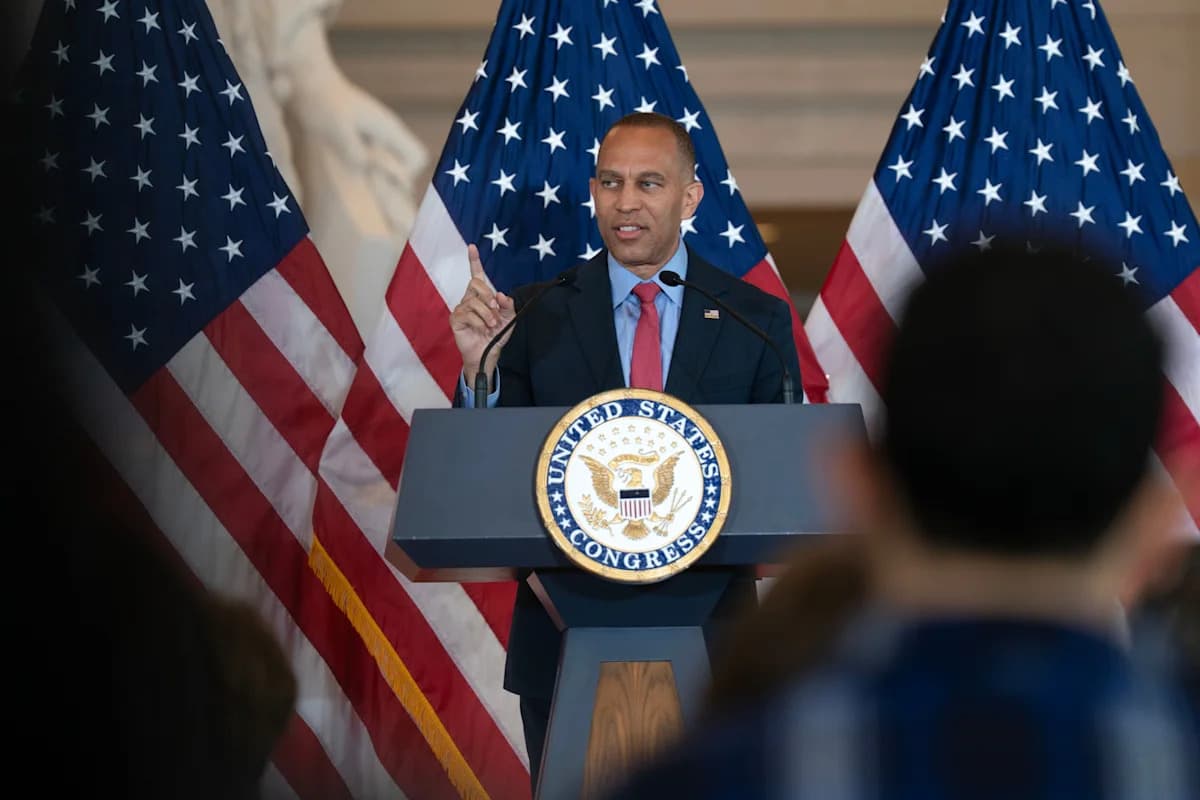
Democrats in the U.S. House of Representatives are currently navigating a complex debate regarding Israel, with Minority Leader Hakeem Jeffries opting to remain on the sidelines for the moment., Jeffries is allowing his caucus to engage in private discussions to address their differing views on the issue, rather than providing direct guidance or leadership.
Internal Caucus Conversations
The decision by Jeffries to withhold his own stance appears to be a strategic move, aimed at fostering an environment where members can express their opinions and concerns freely. This approach allows for a more organic conversation among Democrats, who have found themselves divided over Israel's policies and actions in recent months. By stepping back, Jeffries is encouraging open dialogue, which some members believe is necessary for the party to present a united front.
As tensions rise around the Israel-Palestine conflict, the Democratic Party is facing increasing pressure to clarify its position. The lack of a clear directive from leadership has left some members feeling uncertain about how to proceed. While some Democrats advocate for a more supportive stance toward Israel, others are calling for a reevaluation of the U.S. Relationship with the country, particularly in light of humanitarian concerns.
Future Implications
The outcome of these internal discussions could have significant implications for the Democratic Party as it seeks to maintain cohesion in the face of diverging opinions. Jeffries' current approach may ultimately help to identify common ground, but it also risks prolonging uncertainty within the caucus. As conversations continue, the pressure will mount for the leadership to articulate a clear and cohesive policy position that resonates with the party's diverse membership.
As the situation evolves, all eyes will be on Jeffries and his ability to unify the party's stance on Israel, balancing the various perspectives of his colleagues while addressing the concerns of constituents. The coming weeks will likely reveal whether this strategy of allowing private discussions will lead to a more solidified Democratic position or if it will further complicate the party's approach to foreign policy issues.